
Coaches of Chicago: Leadership Lessons Behind the Bench
When people talk about basketball in Chicago, they often begin with talent, rivalries, and packed gyms on winter nights. Behind that story is another one that matters as much. It’s the story of coaches who lead, teach, and shape lives through the game.
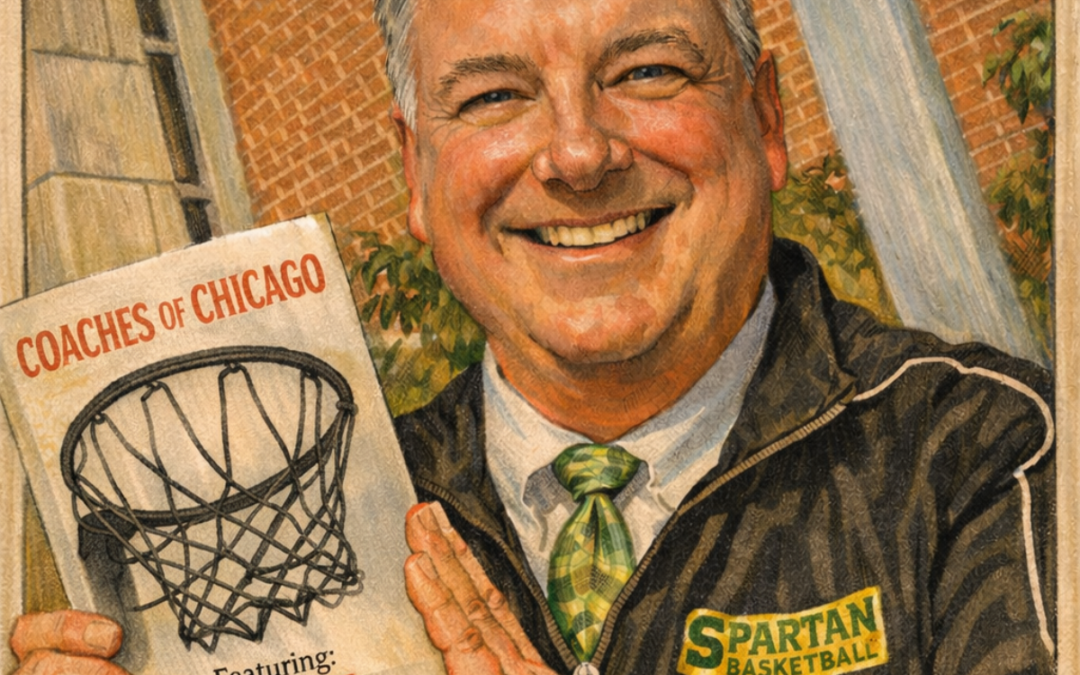
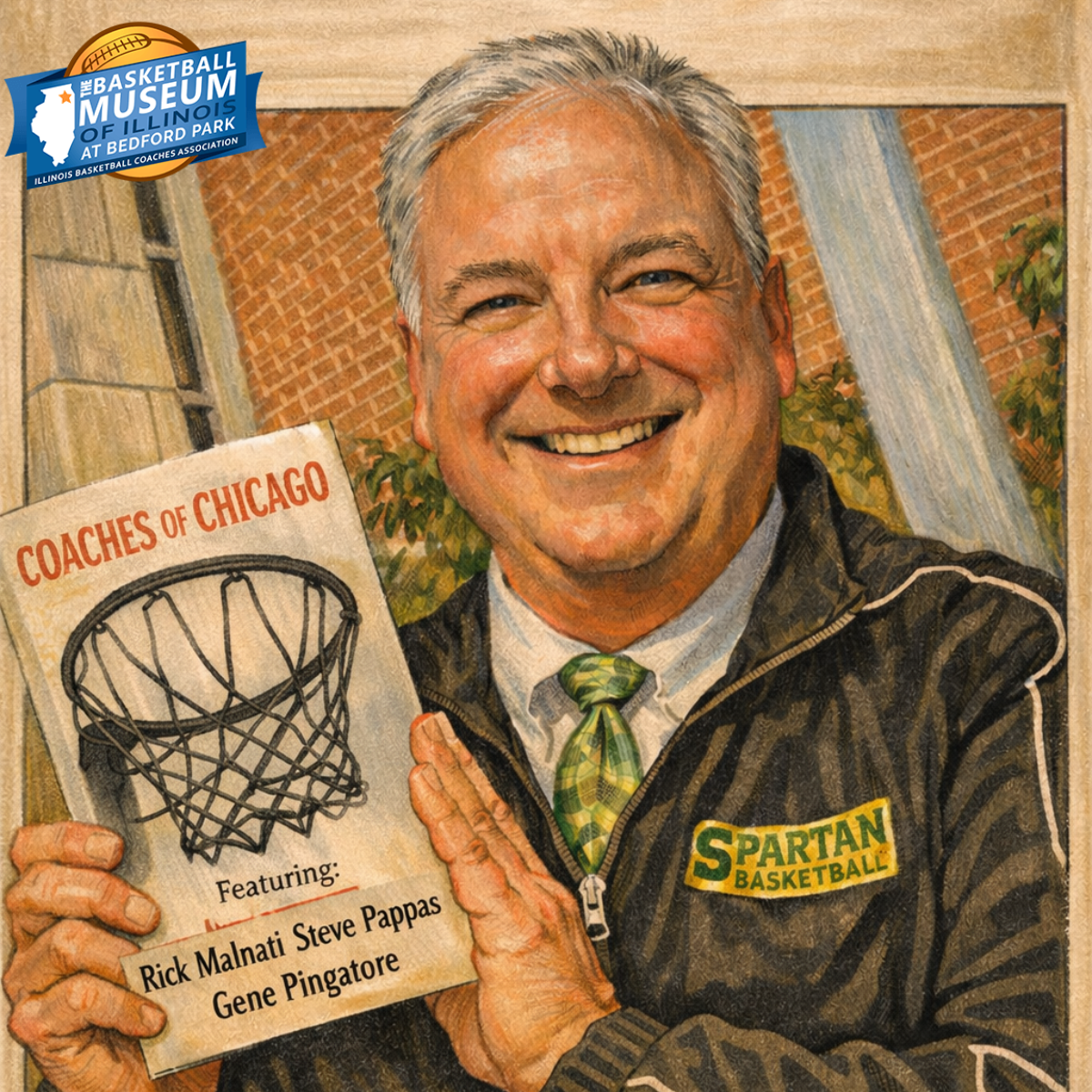
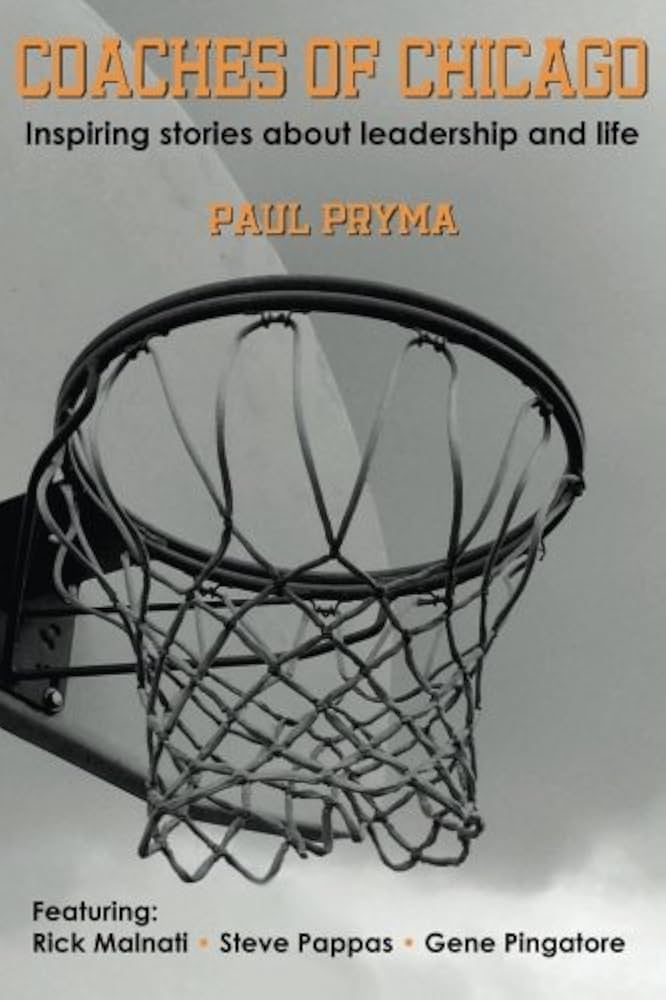
In his book Coaches of Chicago: Inspiring Stories about Leadership and Life, educator and coach Paul Pryma turns the spotlight on three of those leaders: Gene Pingatore, Rick Malnati, and Steve Pappas. The book explores how these coaches handled pressure, controversy, and expectation, and how they kept their focus on people and values along the way.
For the Basketball Museum of Illinois, Pryma’s work offers a powerful companion to our mission. It reminds us that the Hall of Fame story is not only about wins. It is also about leadership.
Paul Pryma: Coach, Principal, and Storyteller
Before he ever wrote about leadership, Paul Pryma lived it.
He spent years leading high school basketball programs at Evanston Township and St. Ignatius College Prep, guiding teams to deep postseason runs, including a fourth-place finish in Class AA with Evanston in 2003. Later, he stepped into school leadership as principal at Glenbrook North High School in Northbrook, where he served for a decade. Along the way, he never lost his connection to the court, returning to the bench as an assistant at Loyola Academy to mentor a new generation of players and coaches.
Pryma has said he was struck by the “enormous influence” a coach has on a school community and wanted to write a book that captured the importance of that role. Coaches of Chicago is his way of honoring that responsibility and passing those lessons on to others.
About the Book: Realities of Leadership in Chicago Hoops
Publisher descriptions and reviews describe Coaches of Chicago as a look into the “raw, vulnerable, and demanding realities of leadership” in a gritty high school basketball environment. Instead of focusing only on final scores, Pryma gathers conversations, stories, and quotes from three legendary coaches:
- Gene Pingatore of St. Joseph
- Rick Malnati, best known for his work at New Trier and Fenwick
- Steve Pappas, who led Gordon Tech and Deerfield
Together, they offer what the book calls “authentic lessons of humanity” inside a world that can include controversy, scandal, and pressure.
The result is not a playbook. It’s a leadership book intended for coaches, teachers, parents, and leaders in any field who want to improve teams, classrooms, families, and organizations by understanding how real people lead under bright lights and high expectations.
Gene Pingatore: Consistency and Stewardship
Gene Pingatore is one of the most recognizable names in Illinois high school basketball history. He spent his career at St. Joseph High School in Westchester and became the winningest boys coach in state history, with more than 1,000 victories. Many fans nationwide know him from the documentary Hoop Dreams, but in Illinois, his legacy runs deeper.
Profiles and tributes emphasize his longevity, his steady presence, and the way he built a program that outlasted generations of players. Under his watch, St. Joseph became more than a team. It became a community touchpoint, a place where young men learned accountability, discipline, and how to represent their school.
In Coaches of Chicago, Pingatore’s story speaks to the power of showing up year after year with consistency and care. He models the kind of leadership that does not rely on quick fixes. It relies on daily habits and relationships built over time.
Rick Malnati: Demanding the Best, Giving the Best
Rick Malnati is closely associated with New Trier High School and later Fenwick High School. At New Trier, he led the Trevians to multiple deep state tournament runs, including a state quarterfinal and a fourth place finish in Class AA. At Fenwick, he guided the Friars to more than 120 wins in five seasons, with a reputation for tough, disciplined teams that still played with freedom and joy.
Outside the high school world, Malnati also spent time as an assistant at Loyola University Chicago, which gave him a broader view of how culture and leadership look at the college level. In Pryma’s book, Malnati represents a coach who demands the best from his players while also investing in their lives away from the scoreboard. Public interviews and features often show him talking about family, faith, and responsibility as much as offensive sets.
His story reinforces a central theme of Coaches of Chicago leadership lessons: high standards and high support can coexist.
Steve Pappas: Care in the Midst of Challenge
Steve Pappas (IBCA Hall of Fame Class of 2006) built his coaching reputation at Gordon Tech and later at Deerfield High School. Obituaries and tributes remember him as a beloved teacher and coach, someone whose impact stretched far beyond wins and losses.
In the early 2000s, when Pappas battled non-Hodgkin lymphoma, the Chicago basketball community rallied around him under the banner of “Team Pappas,” a campaign supported by Loyola University Chicago and others. That response says a great deal about the kind of relationships he built over his career.
Within Coaches of Chicago, Pappas stands as an example of a coach who taught life through the way he handled adversity. His leadership was not abstract. It was lived, often in difficult circumstances, with courage and humility, and players and colleagues still talk about it.
Leadership Lessons Behind the Bench
Across these three stories, Pryma highlights several leadership lessons that connect directly to the work of the Basketball Museum of Illinois and the IBCA Hall of Fame.
From the book and related coverage, clear themes emerge:
- Visibility and responsibility. Pryma notes that a high school coach has an enormous influence on the whole school. The position is highly visible, and every decision sends a message to players and the community.
- Humanity under pressure. Malnati, Pappas, and Pingatore are presented as leaders who keep their focus on people, even in a culture that can be intense and unforgiving.
- Stories as teaching tools. The book is structured as a collection of conversations and stories, mirroring how many coaches teach. Lessons are rarely delivered in lectures. They’re delivered in moments, memories, and examples.
For current and future coaches, Coaches of Chicago leadership lessons offer a reminder that the role is bigger than tactics. It is a form of public leadership that shapes values in real time.
How This Connects to the Basketball Museum of Illinois
The Basketball Museum of Illinois exists to honor the past, illuminate the present, and invest in the future of the game across our state. Stories like those in Coaches of Chicago help us do exactly that.
- They honor coaches whose work has already influenced thousands of players.
- They illuminate how leadership actually looks in gyms, hallways, and huddles.
- They provide practical insights for the next generation of coaches, parents, and school leaders who want to use basketball as a classroom for life.
Featuring Paul Pryma’s work alongside other educational resources, including Endless Teachable Moments by Dr. Jason Ronai, reinforces a shared belief. Basketball is not only a sport. It is a place where leadership is learned, tested, and refined.
Final Thought: Reading the Game Behind the Game
The next time you walk into a gym for a high school game in Chicago or anywhere in Illinois, it is easy to focus on the players on the floor. Coaches of Chicago invites you to look behind the bench as well.
There you will find women and men who make difficult decisions, carry the weight of expectations, and still choose to care deeply about the young people in their charge. Their stories, captured by Paul Pryma, belong alongside the trophies and team photos in our state’s basketball history.
For anyone who leads a team, a classroom, or a family, those stories have something important to teach.
Related Articles
Quinn Buckner, Candace Parker, and Tamika Catchings: Rare Winners at Every Level of the Game
Some basketball careers are remembered for scoring. Others are remembered for championships. A very small number are remembered for winning at every major level of the sport.
That’s what makes IBCA Hall of Famers Quinn Buckner, Candace Parker, and Tamika Catchings such a remarkable group. Each won championships in high school, at the NCAA Division I level, with USA Basketball on the Olympic stage, and in the NBA or WNBA. Their paths were different, but together they represent a rare standard of excellence, leadership, and sustained success across every stage of the game.
Why Illinois Basketball Rivalries Matter More Than the Score
In Illinois, rivalry games have always meant more than a place in the standings. They carry history, pride, emotion, and memory. For players, coaches, students, and families, these games can feel different from the moment they wake up on game-day morning.
Why Illinois High School Basketball Means So Much to Its Communities
For generations, people have filled packed gyms on cold winter nights to cheer for teams that represent something bigger than themselves. The uniforms change, the players graduate, but the feeling remains. Illinois high school basketball carries history, pride, and a sense of belonging that few traditions can match.