
Illinois Basketball Hall of Fame Explained: Who Gets In and Why It Matters
The Illinois Basketball Coaches Association Hall of Fame does more than honor great careers. It preserves the game’s story across the state and recognizes the people who helped shape it.
For many fans, players, and families, the Hall of Fame can feel larger than life.Its purpose is simple. It exists to celebrate excellence, leadership, service, and the lasting impact basketball has had on Illinois communities. At the Basketball Museum of Illinois, the Hall of Fame stands as one of the clearest ways that mission comes to life.
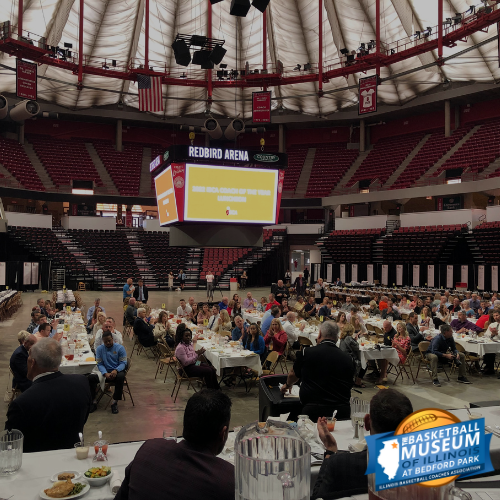
That mission is reflected in the scale and selectivity of the annual Hall of Fame banquet, a tradition that began in 1973 and continues today as one of the state’s signature basketball gatherings. As Basketball Museum of Illinois Board Chairman Bruce Firchau explains, the event honors the “best of the best in Illinois basketball”. From more than 800 IBCA schools, only 20 male players and 20 female players are selected each year. The annual class also includes 10 coaches, 5 career coaches, 8 officials, and 8 media members, along with Friends of Basketball, a category that recognizes community support and the people who help build successful programs.
That selectivity is part of what makes the Hall of Fame so respected. In Firchau’s words, the process can “leave talent on the table.” That is not a flaw in the honor. It is part of what defines it. Induction into the Illinois Basketball Hall of Fame means joining a group that represents the highest level of achievement, service, and influence in the game.
What Is the Illinois Basketball Hall of Fame?
The Hall of Fame is part of the Basketball Museum of Illinois and is rooted in the Illinois Basketball Coaches Association’s long history. The Museum’s Hall of Fame includes players, coaches, teams, officials, media members, friends of basketball, and others whose contributions helped grow and strengthen the game in Illinois.
That broad approach matters. Illinois basketball history wasn’t built by stars alone. It was built by teachers, mentors, organizers, writers, referees, and community leaders who gave the game its reach and meaning.
Is the IBCA Hall of Fame the Same as the Basketball Museum of Illinois Hall of Fame?
In practical terms, yes. The Hall of Fame, housed and presented by the Basketball Museum of Illinois, continues the Hall of Fame tradition associated with the Illinois Basketball Coaches Association. The Museum website presents the Hall of Fame as a core part of its mission and archive, with categories and inductee records tied to that long-standing statewide recognition system.
That connection is important because it gives the Hall of Fame both historical depth and institutional credibility. It is not a pop-up honor or a short-term recognition program. It’s part of a larger effort to preserve Illinois basketball history over time.
Who Can Be Inducted?
One of the strengths of the Illinois Basketball Hall of Fame is that it honors the full basketball ecosystem. Based on the Museum’s Hall of Fame structure, inductees may come from several categories, including:
- Players
- Coaches
- Teams
- Officials
- Media
- Friends of Basketball
This structure gives the Hall of Fame a richer story to tell. A legendary player may represent excellence on the court. A coach may represent decades of leadership and mentorship. A media member may have preserved the game’s history for future generations. A Friend of Basketball inductee may have strengthened the sport through service, advocacy, or community support.
What Does the Hall of Fame Recognize?
At its best, the Hall of Fame recognizes more than talent. It highlights impact.
That impact can take different forms:
- Outstanding playing or coaching achievement
- Long-term service to basketball in Illinois
- Influence on athletes, schools, and communities
- Leadership, sportsmanship, and character
- Historical significance to the game in the state
This holistic approach is part of what makes the Hall of Fame meaningful. It is not just a list of the most famous names. It is a record of who mattered, why they mattered, and how they helped define Illinois basketball.
Why the Hall of Fame Matters
For the Basketball Museum of Illinois, the Hall of Fame is more than a recognition tool. It is an educational asset.
It helps younger generations learn that basketball history in Illinois is bigger than any one era, program, or level of play. It connects high school dynasties, college standouts, community builders, and major contributors into one larger story. It also reinforces an important truth: the game’s legacy is not measured only by points and trophies, but by influence and example.
That makes the Hall of Fame valuable not just for former players and coaches, but also for students, families, and museum visitors who want to understand how the game shaped schools and communities across the state.
Why It Matters to the Museum’s Mission
The Basketball Museum of Illinois exists to preserve, celebrate, and share the state’s basketball history. The Hall of Fame is one of the Museum’s most visible ways of doing that. It gives structure to the stories, people, and programs that built Illinois basketball, making those histories easier to explore and remember.
It also supports the Museum’s broader educational and leadership goals. When visitors read about Hall of Fame inductees, they are not only learning about basketball success. They are learning about discipline, resilience, community leadership, and the values that helped shape generations.
Final Thought
The Illinois Basketball Hall of Fame matters because memory matters.
Without it, many of the people who built the game in this state would slowly fade from view. With it, their stories remain part of the conversation. Their work continues to teach. Their example continues to inspire.
At the Basketball Museum of Illinois, the Hall of Fame is not just about looking back. It is about making sure the next generation understands what made basketball in Illinois special in the first place.
Related Articles
Quinn Buckner, Candace Parker, and Tamika Catchings: Rare Winners at Every Level of the Game
Some basketball careers are remembered for scoring. Others are remembered for championships. A very small number are remembered for winning at every major level of the sport.
That’s what makes IBCA Hall of Famers Quinn Buckner, Candace Parker, and Tamika Catchings such a remarkable group. Each won championships in high school, at the NCAA Division I level, with USA Basketball on the Olympic stage, and in the NBA or WNBA. Their paths were different, but together they represent a rare standard of excellence, leadership, and sustained success across every stage of the game.
Why Illinois Basketball Rivalries Matter More Than the Score
In Illinois, rivalry games have always meant more than a place in the standings. They carry history, pride, emotion, and memory. For players, coaches, students, and families, these games can feel different from the moment they wake up on game-day morning.
Why Illinois High School Basketball Means So Much to Its Communities
For generations, people have filled packed gyms on cold winter nights to cheer for teams that represent something bigger than themselves. The uniforms change, the players graduate, but the feeling remains. Illinois high school basketball carries history, pride, and a sense of belonging that few traditions can match.